25 June 2026
Following Charles Rennie Mackintosh Around Glasgow
Glasgow’s most famous designer left his mark all over the city. A walkable trail of Mackintosh buildings, interiors and details you can see in a day.
Charles Rennie Mackintosh is the name most associated with Glasgow’s architecture, and his work — along with that of his wife, the artist Margaret Macdonald — still shapes how the city sees itself. The good news for visitors is that much of it is close enough together to see on foot over a day.
A word of caution first: the Glasgow School of Art’s Mackintosh Building, his masterpiece, was badly damaged by fire and is under long-term restoration, so check what is open before you set out rather than turning up hopefully.
The city centre
Start on Sauchiehall Street at the Willow Tea Rooms building, designed for Kate Cranston, where the narrow white façade and the interiors are the best surviving example of his complete decorative schemes. The Lighthouse, just off Buchanan Street, was his first public commission — the old Glasgow Herald building, now Scotland’s centre for design and architecture, with a helical staircase up the water tower and a view over the rooftops at the top.
Also central: the Daily Record building on Renfield Lane, tucked into a back lane and easy to miss, and Scotland Street School on the south side, with its two glazed stair towers.
The West End
The Hunterian Art Gallery, beside Glasgow University, holds the Mackintosh House — the reassembled interiors of the home he and Margaret Macdonald lived in on nearby Southpark Avenue, rebuilt room by room with the original furniture in place. It is the closest you can get to standing inside his work as he intended it.
Not far away, the Mackintosh Queen’s Cross church at Maryhill Road is the only church he designed that was built, and is open to visitors.
Further out
House for an Art Lover in Bellahouston Park was built from his competition drawings long after his death, and gives you the full domestic vision at scale. If you have a day and a car, the Hill House in Helensburgh, about an hour away, is his finest surviving house — currently wrapped in a protective steel-mesh box while the walls dry out, which is a strange and rather wonderful thing to see in itself.
The details
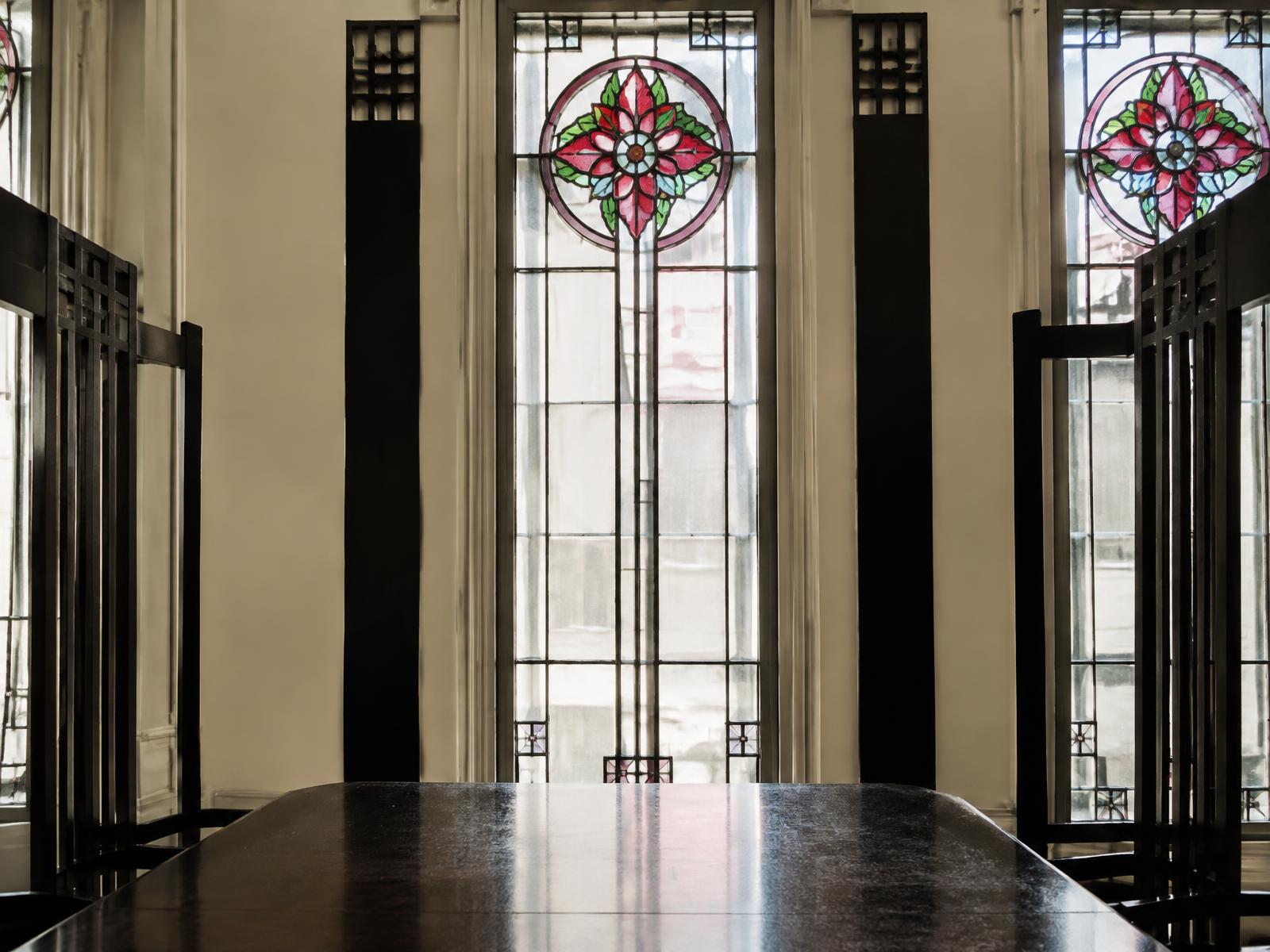
Half the pleasure is in the small things: the rose motif in stained glass, the tall ladder-backed chairs, the lettering, the grids of leaded squares. Once you have seen a few you start spotting imitations all over the city, in pub windows and tea room signs and tiled closes. Mackintosh was not much appreciated in Glasgow in his own lifetime. He is now impossible to avoid here, which feels like the right outcome.